
1x1 planting: a square foot gardening chart for raised beds
Square foot gardening divides a raised bed into one-foot squares and gives each square a set number of plants. At BE we call it 1x1 planting, and the chart below gives the count for each crop: 16 carrots to a square, 9 bush beans, 4 leaf lettuce or 1 pepper. Every BE bed is two squares wide, and BE Garden Match draws your beds as that grid and fills it in with you.
What is square foot gardening?
It is planting by the square foot in place of rows. The bed becomes a grid of one-foot squares, and every crop has a count per square that comes from how much room one plant needs. Small plants share a square. Big ones take a block of squares.
Mel Bartholomew made the idea popular with Square Foot Gardening, which starts from a 4 by 4 foot bed of 16 squares. 1x1 planting keeps the square as the unit and sets each count from university extension spacing, checked plant by plant for a bed 30 inches wide.
Square foot gardening spacing chart
These counts are from the BE plant library, the same data BE Garden Match uses.
| In one square | Plants, most popular first |
|---|---|
| 16 | Carrot, radish, green onion |
| 9 | Bush bean, bulb onion, pea, spinach, beet, leek, turnip |
| 4 | Pole bean, leaf lettuce, parsley, chives, garlic, shallot, arugula |
| 2 | Cilantro, marigold, Swiss chard, snapdragon, celery |
| 1 | Basil, sweet and hot pepper, vining cucumber on a trellis, thyme, dill, head lettuce, zinnia, potato, sweet corn, strawberry |
| 1 per 2 squares | Mint, broccoli, eggplant, cabbage, cauliflower, kale, Brussels sprouts |
| 1 per 4 squares, a 2 x 2 block | Tomato, bush cucumber, zucchini and summer squash, rosemary, lavender, sage |
| 1 per 9 squares | Pumpkin, watermelon, winter squash, rhubarb, artichoke |
Of the 139 plants in BE Garden Match, 99 fit one or more to a square. The other 40 take two squares or more.
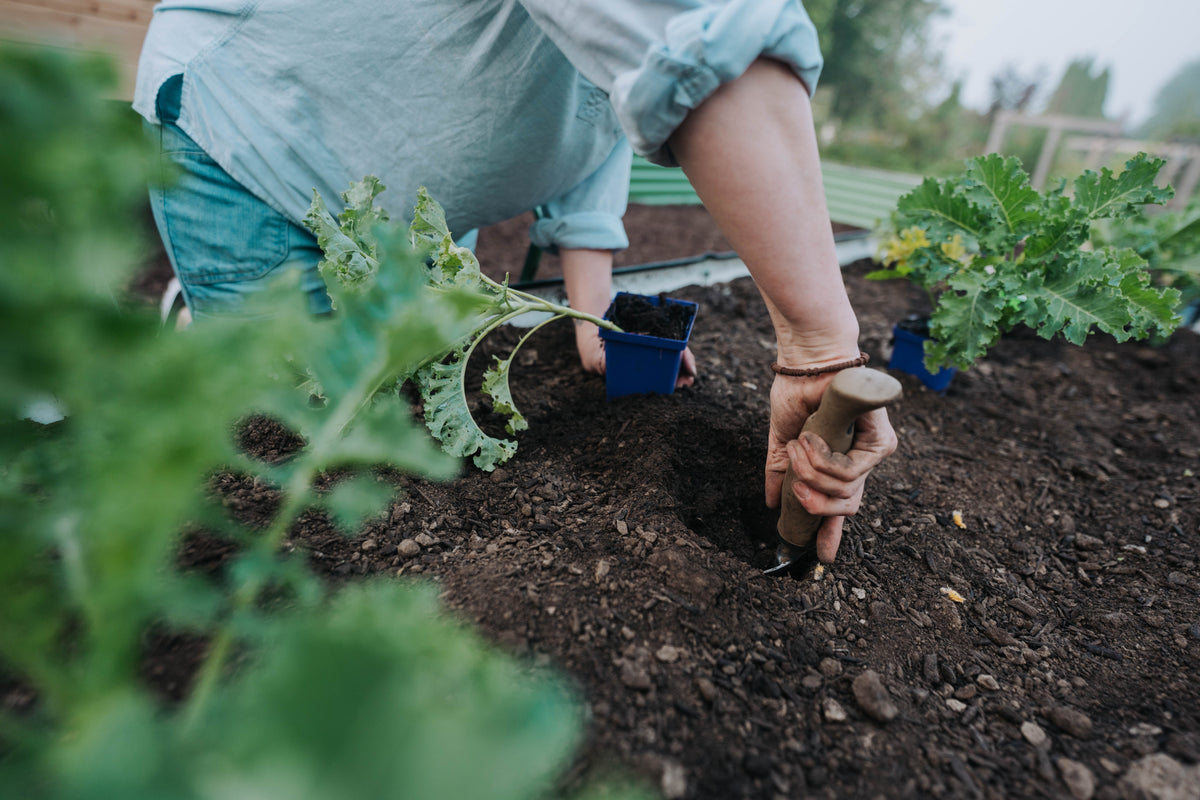
Where these counts differ from older square foot charts, it is usually toward more room. Of 107 plants we compared, 43 match the charts, 53 get more room here and 11 get less.
How many tomato plants per square foot?
One tomato plant takes four squares, a 2 by 2 block. Older charts give a full-size tomato one square. The 2 by 2 block is in line with the 24 inches given for staked or trellised tomatoes (University of Georgia Extension; Colorado State University Extension). Our guide to how to grow tomatoes in a raised bed has the rest.
Zucchini and summer squash take four squares as well. Pumpkins, watermelons and winter squash take nine, and the planner suggests bush or small-fruited types.
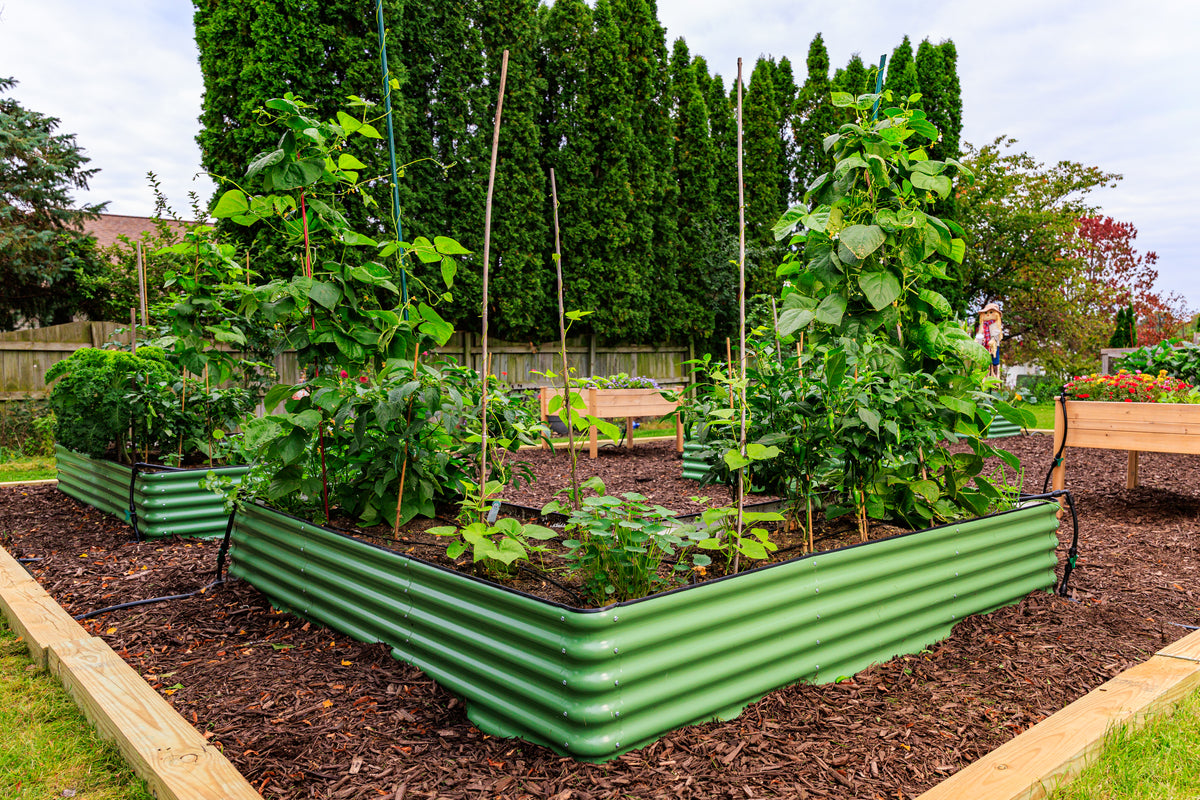
Plan your squares for the season
BE Garden Match lays out your beds square by square, so you can see how many of each plant fit in every bed. It gives you the dates to plant for your region and totals the soil for each bed, and it can email your plan with planting reminders.
A square foot gardening layout: one Inline, sixteen squares
| Plant | Squares | Plants |
|---|---|---|
| Vining tomato | 4 | 1 |
| Sweet pepper | 2 | 2 |
| Basil | 2 | 2 |
| Bush bean | 2 | 18 |
| Carrot | 1 | 16 |
| Bulb onion | 1 | 9 |
| Leaf lettuce | 1 | 4 |
| Parsley | 1 | 4 |
| Cilantro | 1 | 2 |
| Marigold | 1 | 2 |
Sixty plants in one 8-foot Inline. The tomato goes at the north end, where it shades nothing, and the marigolds share the bed with it. Planting dates differ by crop and region, so the planner lists what goes in first.

What are the drawbacks of square foot gardening?
Close planting asks more of the soil. It needs fertile soil, steady water and enough air between plants to keep disease down (Colorado State University Extension). The counts in the chart leave that room, and BE Garden Match caps each count at what its squares allow.
Why plant by the square?
- More from the same space. In a raised bed everything is tended from the path, so the walkways inside the bed can go. Block planting can raise yields about fivefold over a traditional row garden (Colorado State University Extension).
- Fewer weeds. Evenly spaced plants close their leaves over the soil, and the shade keeps weed seeds from sprouting.
- Less seed and less thinning. Plants go in at their final spacing, and the number to buy is known before the trip to the garden center.
- Easy to change. A square that finishes early, such as radishes or spring lettuce, is replanted on its own.
BE beds are built on the square
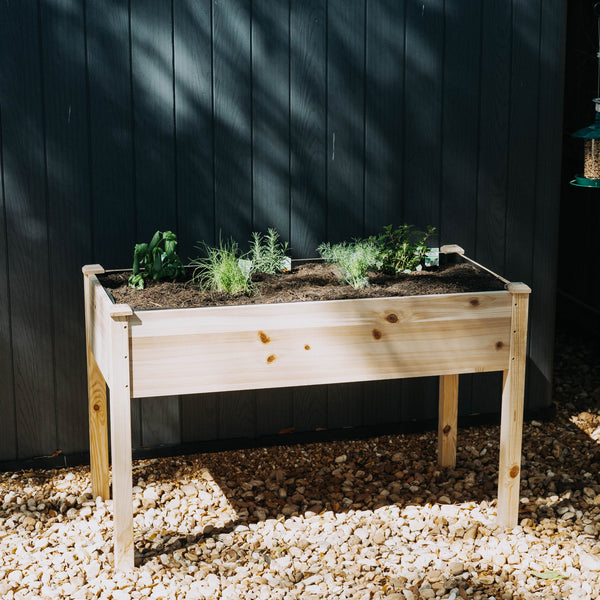
BE raised beds are about 30 inches wide, which is two squares across, so every square touches a wall. An adult can reach about two feet into a bed (Oklahoma State University Extension). With a path on both sides of a BE bed, nothing is more than 15 inches from a wall.
| Bed | Shape | Squares |
|---|---|---|
| Inline | Straight | 16 |
| Loam | L | 26 |
| Tiller | T | 26 |
| Union | U | 28 |
Each bed is 18 inches tall and open to the ground underneath, so deep roots carry on into the soil below. Two Inlines make The Patch, 32 squares, and a garden can grow later without moving the first beds.
A square foot gardening planner: BE Garden Match
- Enter the width and length of the space. BE Garden Match shows gardens that fit, or you lay out your own.
- Enter a ZIP code. The planner sets the growing zone and region. It holds planting dates for 18 regions, built from 83 university extension planting calendars.
- Pick plants and how many of each. Each count is capped at what its squares allow, so nothing is crowded.
- The planner places everything: tall and trellised plants on the north side where they will not shade the rest, perennials together, helper flowers in the same bed as the crops they help, and plants of one family in one bed so they can move to another bed next year.
- It lists what to start indoors, what to sow in the bed and in what order, with short reasons for where plants are placed. Any plant can be dragged to a different square, and the finished plan can be emailed.
It is free to use, and an email address is only needed to save or send a plan. The grid does not need to be marked on the bed. A tape measure on planting day is enough, and the plan shows every square.
Plan your squares with BE Garden Match
Seasonal tips for your zone
Get a short email when it is time to start seeds, plant and harvest where you live, with what works best in your zone.
Thanks, you are on the list for seasonal tips for your zone.
Unsubscribe anytime.
You may also like
Sources
- Colorado State University Extension, GardenNotes #713, Block Style Layout in Raised Bed Vegetable Gardens, reviewed April 2023
- University of Maine Cooperative Extension, Bulletin #2761, Gardening in Small Spaces
- University of Georgia Extension, B 1271, Georgia Homegrown Tomatoes
- Oklahoma State University Extension, Raised Bed Gardening
- UMass Extension, Raised Beds
- BE plant library, version 2.8: 139 plants, spacing set for a 30-inch bed
Square Foot Gardening is the name of Mel Bartholomew's method and of the foundation that continues it. BE Green Living is not affiliated with either.