

Raised bed soil mix: what to fill a raised bed with
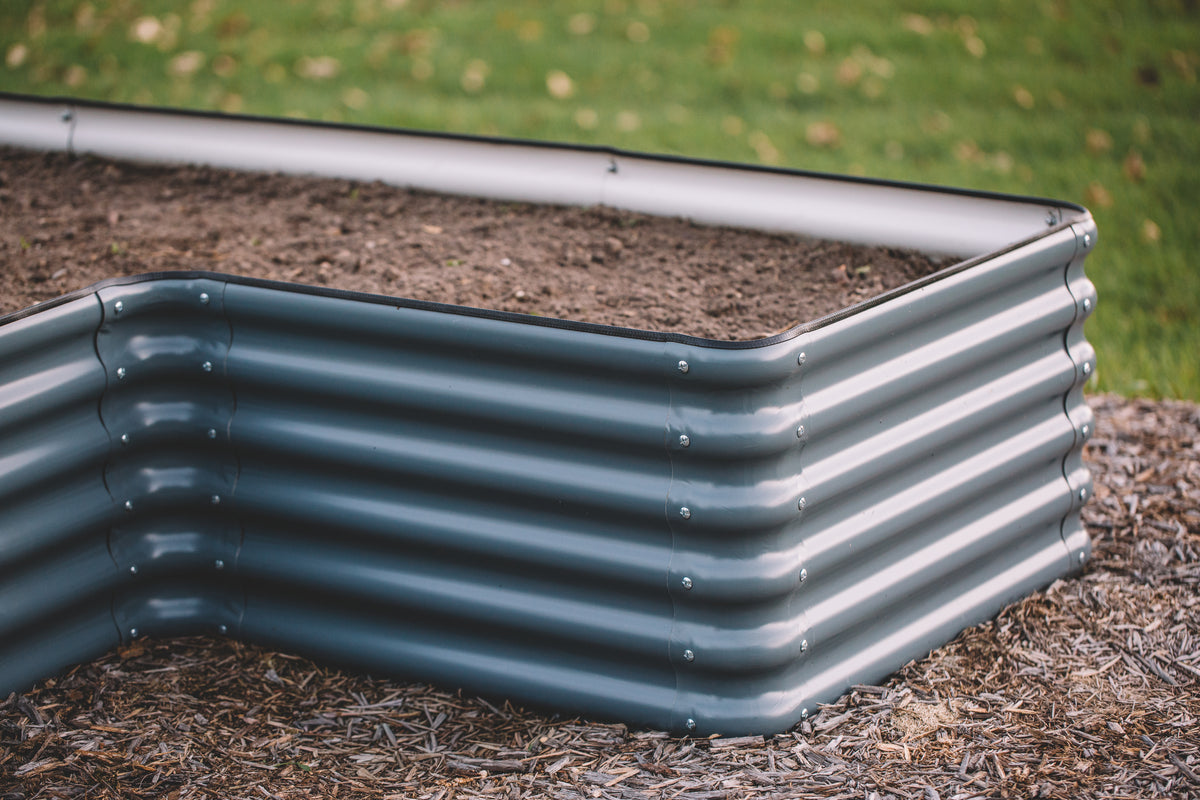
A good raised bed soil mix is about two parts topsoil to one part compost, blended before it goes in the bed. Loam or sandy loam topsoil works best, and potting soil on its own dries out too fast. A BE Inline filled to the rim takes 31.4 cubic feet of mix, which is about 21 cubic feet of topsoil and 10.5 of compost.
The best soil mix for a raised bed
Three universities give close to the same answer: at least half topsoil, with compost making up a third to a half.
| Recipe | Topsoil | Compost | Source |
|---|---|---|---|
| Two to one | 2 parts | 1 part | Minnesota, Maryland |
| Equal parts | 1 part | 1 part | Minnesota, Maryland |
| Seventy-thirty | 70% | 30% | Iowa State |
| Three-way mix | 1 part | 1 part compost or other organic matter, plus 1 part coarse sand | Iowa State |
The sources are the University of Minnesota, the University of Maryland and Iowa State University. Where the ground under the bed is packed or heavy clay, Maryland suggests either two to one or equal parts. If your topsoil is heavy clay, sand makes it more like loam (University of Minnesota).
How much topsoil and compost per BE bed
BE beds are 18 inches tall, and we fill ours to the rim because the soil settles. At two parts topsoil to one part compost, each bed takes:
| Bed | Mix to the rim | Topsoil | Compost | With branches and leaves in the bottom half |
|---|---|---|---|---|
| Inline | 31.4 cu ft | 20.9 cu ft | 10.5 cu ft | 10.5 topsoil, 5.2 compost |
| Loam | 52.8 cu ft | 35.2 cu ft | 17.6 cu ft | 17.6 topsoil, 8.8 compost |
| Tiller | 50.6 cu ft | 33.7 cu ft | 16.9 cu ft | 16.9 topsoil, 8.4 compost |
| Union | 55.1 cu ft | 36.7 cu ft | 18.4 cu ft | 18.4 topsoil, 9.2 compost |
The last column is in cubic feet. Our guide to how much soil a raised bed needs turns these into cubic yards and bags, and has the totals for each BE garden.
Filling the bottom with branches and leaves
You do not need soil all the way down. In a bed at least 17 inches tall, the bottom half can be logs, branches, twigs and leaves, with soil mix on top (Oklahoma State University). In a BE bed that is 9 inches of each, and it halves the mix you buy.
The wood and leaves hold water like a sponge and give it back to the soil in dry spells, and the leaves add nutrients as they break down (Clemson University). The fill sinks as it rots, so plan to top the bed with soil or compost each year. Leave out black walnut, cedar, railroad ties and painted lumber, and any diseased wood or leaves.
Can you use potting soil in a raised bed?
Not on its own. Potting soil dries out too quickly in a raised bed (University of Minnesota). Peat moss and coconut coir can dry the soil too and are better suited to pots.
Compost has limits as well. Too much of it causes trouble holding water, so keep to the recipes above, and use manure sparingly (University of Minnesota).
Is bagged raised bed soil worth it?
For one small bed, bags are the simple way. Look for bags labeled raised bed mix (University of Minnesota). Bags labeled organic soil usually hold no true topsoil at all. Most are a blend of wood waste, bark fines, compost and peat moss (University of Maryland).
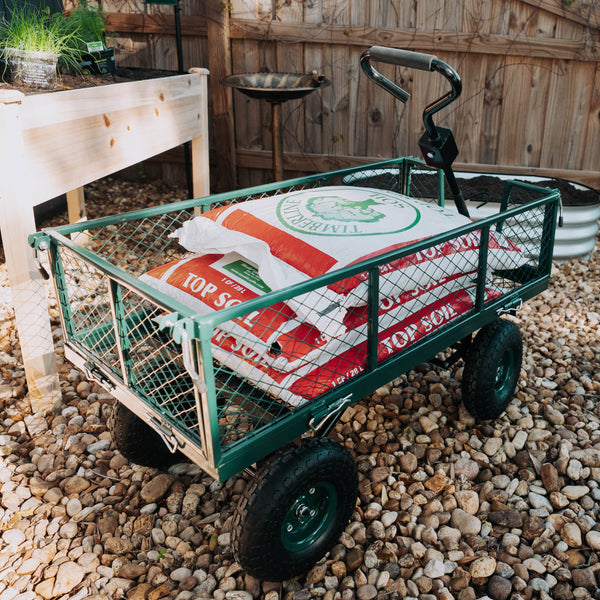
For two beds or more, price a delivery. Topsoil bought in bulk by the cubic yard costs much less than bags (University of Minnesota). Some dealers sell topsoil already mixed with compost (University of Maryland).

How to tell good topsoil from bad
Good topsoil is dark and crumbly and smells earthy (University of Maryland). Pass on soil that smells foul or has gray mottling, and soil that feels chalky, sticky or rough. Sandy or heavy clay soil is also a poor pick.
Before you buy, ask the dealer where the soil came from and look at it yourself.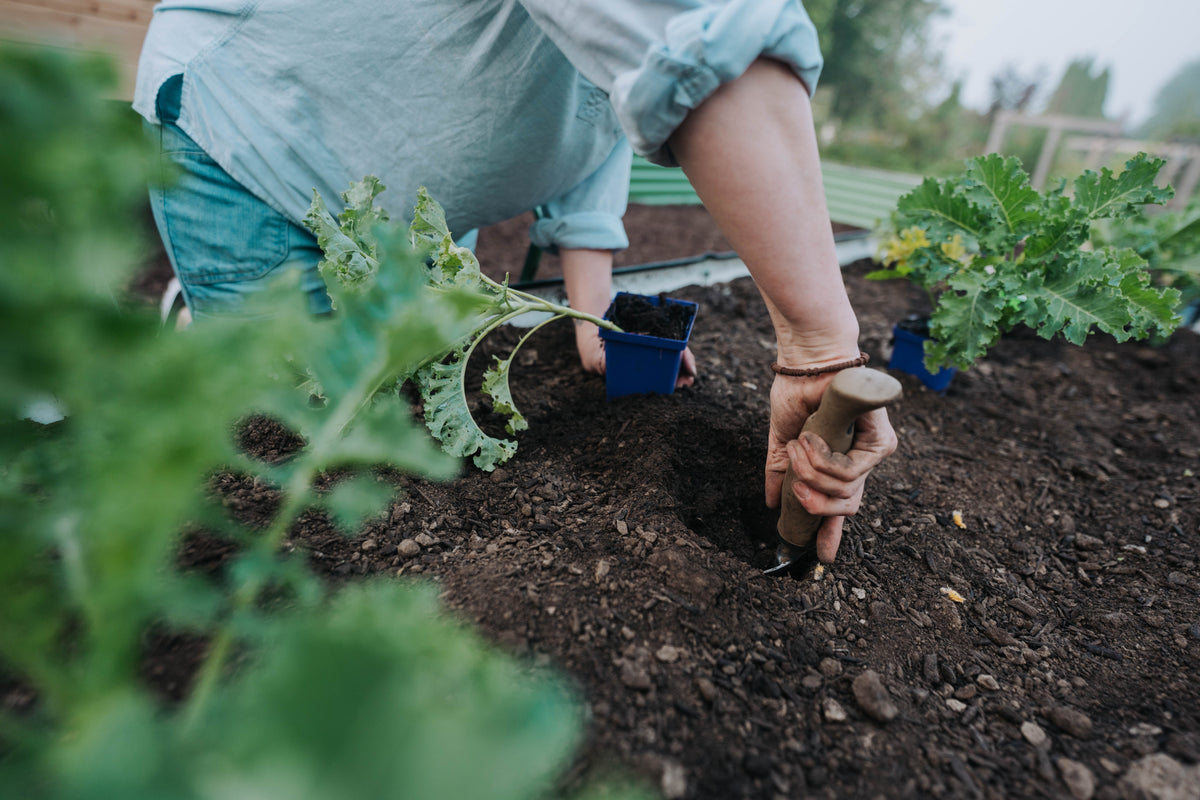
Let BE Garden Match total the soil
BE Garden Match totals the soil for the beds in your plan, in cubic yards and bags, so you know what to order. It also lays out your beds square by square and gives you planting dates for your region.
How to fill the bed
- Clear any grass, then loosen the ground under the bed with a spade.
- Lay in branches, twigs and leaves for the bottom half if you are using them.
- Add the mix a few inches at a time and work the first layers into the ground below, so water and roots pass through (Iowa State University).
- Fill to the rim, since the soil settles.
BE beds are open to the ground, so roots can keep growing into the soil underneath.
Do you need to replace raised bed soil?
No. Keep it and feed it. Top up with compost as the bed settles.
To work out the soil for a whole garden, lay out your beds in BE Garden Match. It totals the soil for the beds in your garden in cubic yards and bags.
Seasonal tips for your zone
Get a short email when it is time to start seeds, plant and harvest where you live, with what works best in your zone.
Thanks, you are on the list for seasonal tips for your zone.
Unsubscribe anytime.
You may also like
Sources
- University of Minnesota, Raised bed gardens
- University of Maryland, Filling raised beds
- Iowa State University, What would be a good soil mix for a raised bed?
- Oklahoma State University, Sustainable Landscapes: Creating a Hügelkultur for Gardening with Stormwater Management Benefits
- Clemson University, Home and Garden Information Center, Hügelkultur Gardening
- BE Green Living, BE Garden Match planner data: soil for each bed filled to the rim, November 2026