
How to grow potatoes in a raised bed: planting, hilling and harvest
To grow potatoes in a raised bed, plant seed potato pieces 4 to 5 inches deep, one to a square. As they grow, add 6 to 8 inches of soil or straw around the stems. Most regions plant in spring, from late January in zone 9a to late May in zones 3 and 4, while Florida, South Texas and the low desert plant between October and February. The dates and counts below come from the BE plant library behind BE Garden Match, and a BE Inline holds 16 potato plants.
At a glance
How to plant
Seed pieces, 4 to 5 inches deep
Spacing
1 per square, about a foot apart
Hilling
6 to 8 inches over the season
Full-size harvest
90 to 120 days
When to plant potatoes
Potatoes are a cool-season crop (University of Georgia Extension). In cold-winter areas, plant once the soil warms in spring, around early April in the Twin Cities (University of Minnesota Extension).
| Region | Zones | Set plants in the bed | First fall frost |
|---|---|---|---|
| East, Midwest and Plains | 3, 4 | late May | Sep 25 |
| East, Midwest and Plains | 5 | late Apr to late May | Oct 8 |
| East, Midwest and Plains | 6 | early Apr, again late May | Oct 20 |
| East, Midwest and South | 7 | early Mar to early May | Nov 3 |
| The South, Virginia's coast to north Texas | 8a | late Feb to early Apr | Nov 12 |
| The South, coastal Carolinas to central Texas | 8b | Feb, again early Aug | Nov 28 |
| Gulf Coast and North Florida | 9a | late Jan to late Mar, again late Aug to late Sep | Dec 8 |
| Central Florida | 9b | early Nov to late Feb | Rare |
| South Florida and the Keys | 10, 11 | early Oct to late Jan | Rare |
| South Texas, Lower Rio Grande Valley | 9b, 10 | late Dec to early Jan | Rare |
| Mountain West, high elevations | 3 to 5 | May | Sep 12 |
| Mountain West valleys and high desert: Denver, Salt Lake City, Boise, Albuquerque, Reno | 6, 7 | late Apr to early May | Oct 12 |
| Mid desert: Tucson, Las Vegas, St. George | 8, 9 | late Feb to late Mar | Nov 28 |
| Low desert: Phoenix, Yuma, Palm Springs | 9b, 10 | early Dec to late Feb | Dec 12 |
| Pacific Northwest, west of the Cascades | 8, 9 | late Mar to late May | Nov 12 |
| California inland valleys | 9 | early Feb to late Mar, again Aug | Dec 5 |
| California north coast and Bay Area | 9b, 10 | early Feb to late May, again Aug | Dec 15 |
| California south coast: Los Angeles, San Diego, Santa Barbara | 10, 11 | early Feb to late Apr, again early Jul to late Aug | Rare |
Early is the 1st to the 15th of the month, and late is the 16th on. In the Rio Grande Valley, potatoes that sprout in January can be hurt by a late frost, and mulch protects them (Texas A&M AgriLife Extension).
Can you plant potatoes from the grocery store?
It is better not to. Grocery store potatoes may be treated to keep them from sprouting, and they can carry disease (University of Minnesota Extension). Potatoes saved from your own crop can carry disease too.
Buy certified seed potatoes instead. Garden centers usually stock them in spring.
How to cut seed potatoes
Cut seed potatoes a few days before planting (University of Minnesota Extension).
- Leave small seed potatoes, about 1 to 1 1/4 inches across, whole.
- Cut bigger ones into chunks about 1 1/4 inches across, with a clean knife on a clean board.
- Give each piece at least one eye. Two or three is better.
- Let the pieces sit at 60 to 70°F for a few days so the cut faces dry and form a tough skin.
How deep and how far apart to plant potatoes
Plant the pieces 4 to 5 inches deep, with the eyes facing up (University of Georgia Extension). BE Garden Match plants potatoes one to a square, in two rows 15 inches apart. Plants sit 12 1/2 inches apart along the row and 7 1/2 inches in from the walls.
| Type | Room per plant | Inline (16 squares) | Loam (26 squares) | Tiller (26 squares) | Union (28 squares) |
|---|---|---|---|---|---|
| Potato | 1 per square | 16 | 26 | 26 | 28 |
For a bed of 26 to 28 squares, BE Garden Match starts from 8 potato plants.
How deep should a raised bed be for potatoes?
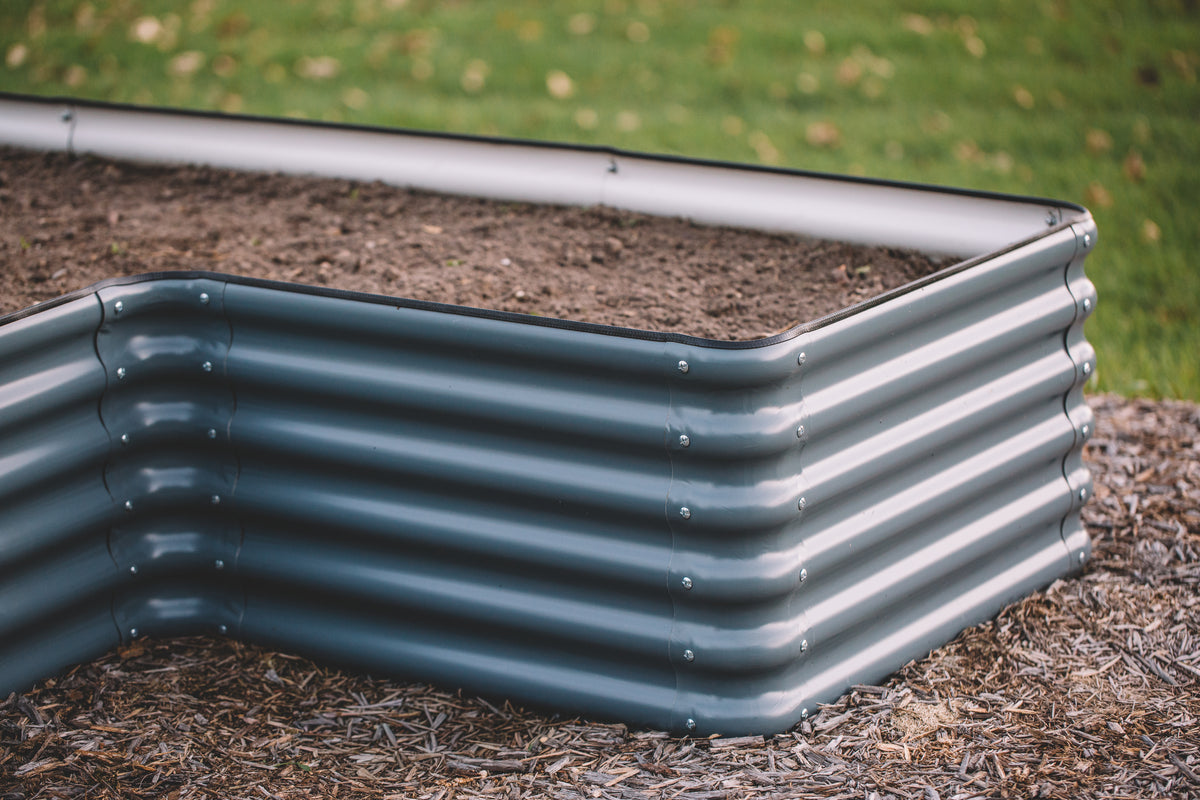
A BE bed is 18 inches deep. Fill it to the rim, since the soil settles, and seed pieces planted 4 to 5 inches down have more than a foot of loose soil below them. How deep a raised bed should be covers other crops, and how much soil a raised bed needs has the amounts for each bed.
Plan your potatoes for the season
BE Garden Match lays out your beds square by square and puts tomatoes in a different bed from potatoes, since the two share late blight. It gives you planting dates for your region, totals the soil and can email your plan with planting reminders.
How to hill potatoes in a raised bed
Hilling means piling soil around the stems as the plants grow. It keeps the new potatoes in the dark, since potatoes exposed to light turn green (University of Minnesota Extension).
- Start when the shoots are about 6 inches tall (University of Georgia Extension).
- Draw soil from between the rows up around the stems, without digging deep enough to hurt the roots, or pile straw over the potatoes.
- Hill once or twice more as the plants grow, until you have added 6 to 8 inches in all (University of Minnesota Extension).
BE Garden Match keeps potatoes in a block at one end of the bed, so the soil and straw you add does not bury the plants beside them.
How much water do potatoes need?
Aim for about 1 inch of water a week, counting rain. Soak the soil once or twice a week (University of Minnesota Extension).
Keep the moisture even, most of all when the plants bloom, since uneven water leads to knobby potatoes and growth cracks. When the plants start to yellow and the lower leaves die, water less to help prevent rot late in the season (University of Georgia Extension).
Potato pests and problems
| Problem | What it is | Source |
|---|---|---|
| Green potatoes | Skin turned green by light. Cut away green parts before cooking, skip potatoes that are green over large areas, and do not eat the sprouts | University of Minnesota |
| Colorado potato beetle | An insect pest of potato plants | University of Minnesota, University of Georgia |
| Potato scab | Dark, rough, corky spots on the skin. The potato is still edible | University of Minnesota |
| Early and late blight | Diseases that attack potato plants. Late blight also attacks tomatoes, so BE Garden Match keeps the two in different beds | University of Minnesota, University of Georgia, BE plant library |
| Hollow heart | A hollow center linked to uneven watering or poor nutrition. It does not affect taste or safety | University of Minnesota |
When to dig potatoes
Dig new potatoes about 7 to 8 weeks after planting (University of Minnesota Extension), or once the first flowers open (University of Georgia Extension). Take a few from near the surface beside each plant and leave the rest to grow.
Dig full-size potatoes after the plants have dried up or the potatoes reach full size. Pick a dry, warm day and use a spading fork, taking care not to stab the potatoes (University of Minnesota Extension).

Brush off the soil but do not wash them. If the skins rub off easily, cure them at 60 to 65°F somewhere dark and airy for 10 days or more. Then store them at 32 to 40°F with high humidity, such as in a refrigerator. Store potatoes for frying at 40 to 50°F (University of Minnesota Extension).
Potatoes need a block of their own and a bed away from tomatoes. Plan where they go in BE Garden Match, and see the guides to growing onions and carrots, two more crops that keep for months in storage.
Seasonal tips for your zone
Get a short email when it is time to start seeds, plant and harvest where you live, with what works best in your zone.
Thanks, you are on the list for seasonal tips for your zone.
Unsubscribe anytime.
You may also like
Sources
- University of Minnesota Extension, Growing potatoes in home gardens
- University of Georgia Cooperative Extension, Circular 1011, Home Garden Potatoes
- Texas A&M AgriLife Extension, RGV Homeowner Vegetable Guide, revised 2022
- BE plant library, version 2.11, and the BE Garden Match planner, version 1.8.0: planting dates, spacing and bed counts